
Are you getting confused while checking the gold rates?
One day the rate may increase, and the next day it might drop. If you go directly to a jewelry shop, the staff will ask whether you want 24k or 22k gold, and they will inform you that additional charges and GST will be applied.
You’ll get confused while seeing the final bill, whether you paid the correct price or you overpaid. This is a common problem, but the good news is, once you understand how to calculate the gold rate, everything will be easy and confident. In this guide, you will learn about how the gold rates are calculated, why they are changing daily, what are the charges in jewelry bills, and how to buy gold smarter. After reading this guide, you will buy gold with confidence.
Now let’s start with
Why is the gold price changing daily?
Gold is not a normal metal; it’s a safe-haven investment asset. If there’s any global uncertainty, like war, inflation, or a slow economy, most people will buy gold, and the price will rise. That’s why it’s called a safe haven asset.
Global Factors
Beyond India, there are some other factors that decide the gold price, too.
International gold price
Gold will be traded globally in USD; if the value of gold in the US increases, that affects the Indian price too. Even if nothing happens in India, the gold price will get impacted by global changes.
USD vs INR
This is the most important reason; here in India we import gold, so
An increase in the dollar price will also raise the gold price; a weakening of the rupee will make gold more expensive.
I will tell you with a simple example.
Gold = $2000
₹80/$ → ₹160,000
₹85/$ → ₹170,000
The gold remains the same, but its price has increased.
Interest Rates
If the interest rate is high from the RBI or the US, people will start to invest in FDs, and the gold demand will be low.
If the interest rate is low, gold demand will increase, so there will be a rise in the gold rate.
World Problems
As we discussed above, if there is a world problem, everyone will buy gold; in case there is a war or economic crash, the gold demand increases, and the price will also increase.
India-Specific Factors
In India, there are some factors that will increase the gold rate.
Demand and supply
In India, we use gold for every occasion; if there is any demand, the price will automatically go up.
Government Tax and Duty
Here in India, we have to pay tax for buying gold, which includes
Import Duty
GST (3%)
Other charges
These charges are included in the total price we pay at the time of purchase.
Festival Impact
During festival times like Diwali, Akshaya Tridhiyai, and Dhanteras, there will be more demand, and the price will go up.
City-wise price
The price in each city will be different due to local demand, transport cost, and jewelry margin.
Real events influence the historical gold price trend in India, the gold price will mostly increase in the long term, but there will be more fluctuation in the short term.
Let’s see the history of the last 5–10 years.
2016 – Demonetization
Cash shortage led people to move towards gold for safety, resulting in a sudden spike in prices.
2020 – COVID Pandemic
Economic uncertainty pushed investors towards gold as a safe asset, driving prices to an all-time high.
2022 – 2024
Gold prices showed steady growth due to consistent demand and global market conditions.
2025 – 2026 (Inflation & War)
Ongoing global uncertainty has led to higher fluctuations in gold prices.
Budget Announcements
Changes in import duty or government policies can directly influence gold prices in India.
Mastering the Basics: Gold Purity
What is Karat (K)?
We will see what the karat is now. Karat (K) is a measure of gold purity.
I will tell you in simple form:
- 24K = Pure gold
- 22K = a small amount of metals mixed with gold
- 18K = A greater amount of metals mixed with gold
Why are metals mixed with gold?
Normally, 24-karat gold alone will not make a jewel; that will be very soft and malleable, so it is not suitable for jewelry use. We can usually get 24k bars and coins.
To increase strength and create a 22k jewel, manufacturers add copper or silver.
Common Gold Types in India
In India, we have several types of gold, each serving different purposes based on its purity.
Tip: For jewelry, 22K is best and for Investment 24K is best.
Purity vs. Price
It’s important to understand gold and purity; the price will be higher when the purity is high.
Here is an easy formula for price calculation:
22K price = (24K price / 24) × 22
This is the base calculation used by jewelers.
BIS Hallmark – Must Verify
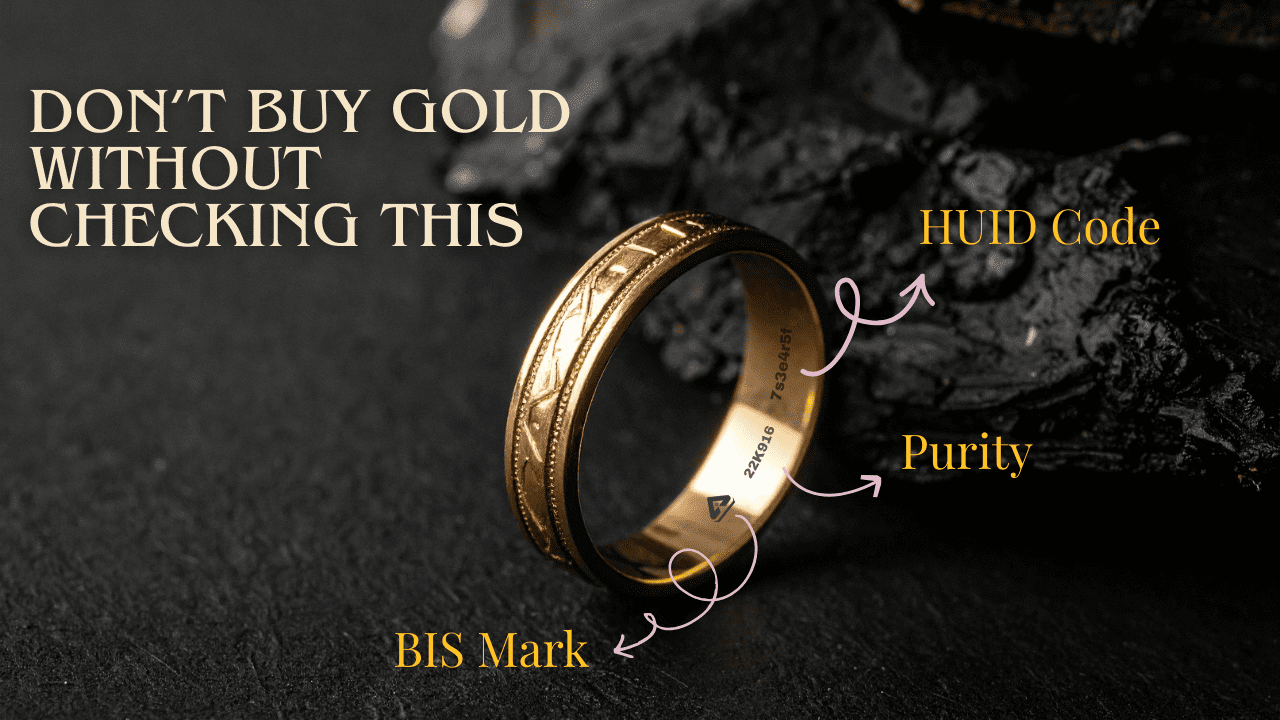
While going to purchase gold jewelry, it is important to check the BIS hallmark.
Why is it important?
- Gold purity will be correct.
- Check if the jeweler is registered.
- To know whether it is government-approved or not
Important tip,
Always check the hallmark in the jewel you buy; otherwise, the resale value will be low. If you don’t know how to check whether the jewel is hallmarked or not, read about How to Check HUID Gold Hallmark.
What is the Base Gold Rate?
IBJA
The IBJA, which is known as the Indian Bullion and Jewellers Association, will give daily official gold rates.
Why is this information important?
Jewelers mostly choose the IBJA rate as the base rate.
Before buying gold, check the rate with IBJA or with us at Precious Metal.
MCX – Live Market Price
MCX is known as the Multi-Commodity Exchange.
Here, live gold and silver trading will happen, and we can see real-time price movements.
IBJA vs. MCX Difference
- IBJA is the actual jewelry base rate.
- MCX trading price
Raw Gold Price Calculation
I will explain with simple steps.
Step 1: Global Price
This price will be in USD; that is per ounce.
Step 2: Convert to INR
Need to convert from USD → INR
Step 3: Add Import Duty
Indian Tax will be applied.
Step 4: Add GST / other charges
GST and making charges will be applied.
Final Price:
This is how you will get the 24K gold base price in INR.
How is the 22k gold rate calculated?
Based on this formula, 22k is calculated.
22K = (24K / 24) × 22
Per Gram vs. 10 Grams
In India, we mostly say “10 grams,” which is 1 divided by 10.
Now you know how to actually calculate the gold price, but calculating manually is a little bit difficult. For your convenience and to make gold price calculation exactly based on your purity, we created a GOLD RATE CALCULATOR. Check the price instantly based on your city.
The True Cost of Shine: Gold Jewelry
How will the price be calculated?
When we go to buy gold jewelry, we think gold rate × weight is a final price.
But in reality that is not the total cost; we pay a larger amount than that.
Beyond the gold rate, what do we actually pay?
Now, we’ve already seen the main components of gold jewelry.
- Gold Value
- Making Charges
- Wastage Charges
- GST (3%)
If we calculate these components together, we can buy gold smartly. I will give you an example for easy understanding.
Understanding the Making Charges
We need to be careful with the making charges; they will vary among the shops. Always compare before buying.
What are wastage charges?
Make sure to clarify the wastage charges, especially if you are buying heavily designed jewelry; the wastage cost will be high. Sometimes there will be hidden costs too, so it’s better to clarify.
Don’t Forget About GST
In your final bill, 3% extra will be added, and we cannot avoid this fee.
Pro Tip
A smart buyer will use a gold rate calculator before buying; no shop can cheat them.
Ask the Jeweler.
Ask your doubts even if you feel silly.
- What is today’s 22k rate?
- How did you calculate making charges?
- Do you add separate wastage?
- Whether this jewel is hallmarked
- Give a final breakup
If you ask for this information, you won’t get cheated easily.
Before You Buy Gold: Smart Buyer’s Checklist
I have created a smart buyer’s checklist. Before you buy gold, follow this checklist; you won’t overpay.
Don’t forget to save / print / screenshot for your future.
✔ Verify today’s gold rate
Check IBJA (official rate) and compare with the shop price.
✔ Confirm purity rates
Ensure 22K / 18K rates are correctly calculated from 24K, not random pricing.
✔ Clarify making charges
Ask if it is per gram, percentage, or fixed charge and compare before buying.
✔ Check wastage charges
Confirm if separate wastage is added and know the percentage.
✔ Verify BIS hallmark
Check BIS logo, 916 purity, and HUID number before purchase.
✔ Ask for detailed bill
Bill must include weight, purity, rate, making charges, wastage, and GST.
✔ Check buyback policy
Understand exchange terms for future resale value.
✔ Compare before buying
Check multiple shops like Tanishq, Malabar Gold, Joyalukkas, GRT and compare rates & making charges.
✔ Watch for hidden charges
Be aware of extra costs like stone charges, polishing, or design charges.
✔ Avoid impulse buying
Track gold prices for 2–3 days before buying to get the best rate.
Follow this checklist to save money, avoid hidden charges, and buy gold with full confidence.
Beyond the Bullion: Debunking Gold Pricing Myths
In India there are lots and lots of myths about gold, but reality is different. Here are some common myths let’s break:
Myth 1: Gold will be cheaper during festival time.
However, during festival times like Diwali and Akshaya Tritiya, the demand will increase, leading to a rise in prices.
And what about the ad you see on TV about discounts? They will give you some discounts on making charges, not on the gold rate.
Myth 2: Prices will be the same in all cities.
No, the base gold rate (IBJA) will be almost the same, but the final price will be different.
But why?
- Making charges vary
- Wastage varies.
- Add their brand premium
So the prices will change from shop to shop.
Myth 3: “Old gold exchange value is fixed.”
In Reality, exchange value depends on
- Purity testing
- Melting loss
- Current market rate
Often there will be a deduction; you will not get full value for the final amount.
Expert Tip: Think before you buy if you plan to resell in the future; buy plain gold bars or coins for better resale value. If you choose a heavy jewelry design, there will be high making charges, and it will not cover the resale value.
Myth 4: “Online gold is always cheaper than physical gold.”
No, there may be some small difference, but you need to consider delivery charges and insurance, and you will not be able to verify the gold physically; it’s always best to visit the shop.
Myth 5: “All gold is pure if it’s yellow.”
No, don’t trust the color; it’s a big mistake. Always confirm the gold with the BIS Hallmark and HUID number; these are the proof.
FAQs: Answers to Your Questions About Gold Price Calculations
Q1: What is the difference between the gold rate per 10 grams and per gram?
The 10-gram rate is the total value; divide the 10-gram rate by 10 for the per-gram rate.
Example:
₹66,000 (10g) → ₹6,600 (1g)
Q2: How accurate are online gold price calculators?
Approximately our gold rate calculator will provide a correct value, but making changes and wastage may differ depending on the shop, so you will get a little difference in your final value.
Q3: Can I negotiate making charges?
Yes, you can, especially on high-value purchases or simple-design jewelry.
You can negotiate and save up to 1000 to 5000.
Q4: Is it better to buy 24K gold coins/bars or 22K jewelry for investment?
24K gold (coins/bars) is always the best.
Why?
- Pure gold (99.9%)
- Low making charges
- Easy resale
If you buy jewelry as an investment, you will lose money making charges, and the resale value will be low.
Q5: What happens if I exchange old non-hallmarked gold?
The jeweler will perform a purity test, melt, or acid test and will provide you the actual gold base value; there will be a deduction too for impurity and processing.
Q6: Why do gold prices change daily?
Due to global demand & supply, international market movement, USD vs. INR rate changes, and economic & political factors, the gold price will fluctuate.
Conclusion: Empowering Your Gold Decisions
Buying gold is always emotional for us, but if we buy at the correct price, that is the smart move.
The global market and local demand will determine the gold price, while its purity will determine its value. Jewelry’s final prices include gold value, making charges, waste, and GST. If you understand these factors, you will not overpay.
Empower Yourself
Before you buy jewelry, check for the IBJA rate, ask for a bill to verify, and question them confidently about your doubts. Then only the deal will be transparent, and when you break the myths, you can make decisions correctly. Don’t trust that the rates will be the same everywhere.
Now you know how to calculate the gold price, how to identify the hidden charges, and what to ask the shopkeeper. Hereafter, gold is not a mystery; it’s a clear process.
Compare the gold rate online with other shops; calculate and decide smartly. If you need to calculate the exact old price, use our Gold Rate Calculator.
The gold market changes daily, so stay updated with us through our website Precious Metal. In for daily price tracking and market trends, we will also include the latest GST, import duty, and IBJA rates so you are always reading accurate and updated information here.